


PMKK
04/2026: In Ukrainian gastronomy, sweetened condensed milk is more than just an ingredient. It’s the taste of childhood and an integral part of the country’s culinary heritage. The universally loved sweet treat is used in traditional recipes and even haute cusine, whether classic British banoffee pie, French profiteroles, Vietnamese coffee or nourishment for the first astronauts.
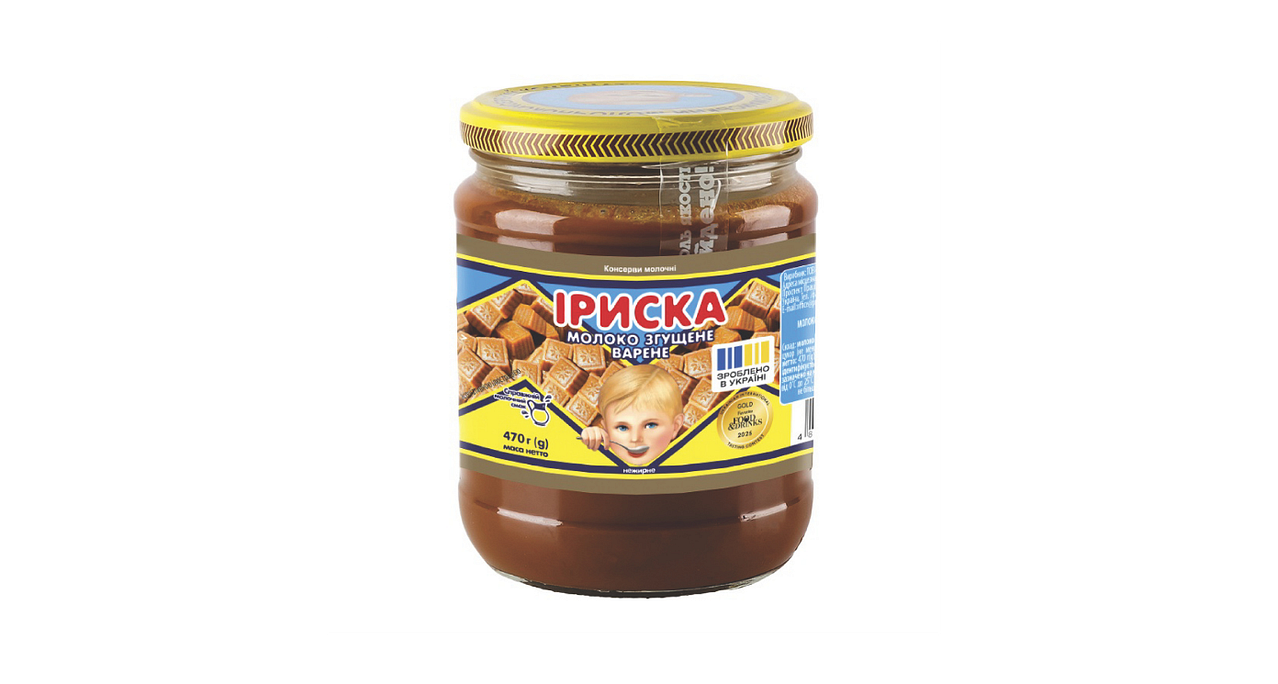
The Pervomaisky Milk Canning Plant (PMKK) processes around 300 tonnes of raw milk each day. 96 percent of its product range is devoted to sweetened condensed milk, and a third of that is the legendary caramelised Iriska. The creamy caramel dessert has received multiple awards, most recently the gold medal at the international tasting competition, “Favourite Food & Drinks Ukraine” (FFDU) 2025. The PMKK plant, which began operating in February 1956 with an annual capacity of 20 million cans, is now one of Ukraine’s three leading milk-processing businesses. For over ten years the company has been exporting to more than 15 countries, and since 2023 also to the EU. Production meets the ISO 9001, ISO 22000 and HALAL standards and is guided by the key principles of top quality and natural authenticity.
A classic recipe
‘For our Iriska, we follow a classic recipe using only selected milk and sugar – with no unnecessary additives,’ explains Oleksandr Bazhan, director of PMKK. One litre of milk gives about 400 grammes of sweetened condensed milk. The milk thickens slowly in vacuum evaporators at 60–85°C. The water evaporates and milk protein remains, so the milk retains its natural flavour. As it cools, the lactose crystallises, creating the smooth, consistent texture that makes condensed milk so thick and creamy. This method was patented back in 1856 and has barely changed since then.
In the next step – caramelisation – the condensed milk is transformed into the beloved Iriska. The classic, sweetened condensed milk is poured into containers and heated in autoclaves. Here, under controlled conditions, the typical caramel flavour, the homogeneous consistency and the golden colour develop. The raw materials come from certified farms in the Mykolaiv region, with each batch undergoing strict chemical and microbiological checks.

«We want to know exactly where every single drop of milk comes from. We’re not just manufacturing a product – we’re maintaining trust that has grown over decades.»

Because it’s not just about flavour. Packaging also plays a critical role. Right from the start, Iriska came in different types of packaging. But glass was and remains the favourite – and for good reason. ‘Glass is our tradition, because it preserves the natural flavour, does not react with the product and allows you to see colour and texture. For us, the transparency of glass symbolises the transparency of our production,’ explains the director.
When it came to updating the packaging without losing Iriska’s established identity, PMKK turned to Vetropack, a glass packaging manufacturer known for its philosophy of sustainability and innovation.
Glass – a material that builds trust
The collaboration began in 2023 and developed into a technical challenge that came down to millimetres – for example for the heel radius. Once in the jars, Iriska is boiled for more than an hour at over 100°C to achieve its typical flavour and golden hue. So the packaging must survive thermal stress, internal pressure during caramelisation, plus the subsequent logistical processes.
The jars must therefore be both robust enough for autoclaving and light enough to meet today’s sustainability requirements.
During the five-month development phase, a multitude of simulations and tests were carried out. Vetropack engineers calculated the effect of high pressure and sugar concentration on the thermal expansion of the product while it was boiled in jars. They also had to take into account that condensed milk is a lot denser than water – and therefore heavier.
The development process resulted in a customised jar with a volume of 442 ml, holding 470 grammes of the product. Precise calculations ensured a balanced look: neither over- nor under-filled. The bottom was optimised to reduce stress during heating. In addition, the heel radius was adjusted, knurlings were added for strength and critical zones were stabilised. Visual appeal was just as important, with clear lines, a distinctive silhouette and a recessed label surface to provide protection during transport. The new twist-off lid guarantees improved sealing and ease of opening, without putting further pressure on the edge of the jar. Last but not least, the neck diameter was adjusted to allow room for a dessert spoon – not simply for ergonomic reasons, but based on knowing how people enjoy Iriska in real life. The jar now combines greater stability with a more high-end look – especially important for EU markets. Legendary Iriska in its new jar has already conquered numerous international trade fairs, including in Paris and Dubai, proving that tradition can be contemporary and sustainability can taste delicious.


Sustainability as a production philosophy
In a world where consumers focus increasingly on sustainability, glass is the material that combines Iriska’s past and future: authentic and contemporary at the same time. It builds trust, communicates naturalness better than any label and conserves the purity of the product without compromising. ‘Updating the jar with Vetropack’s support is more than just a design makeover. It represents a transformation in our thinking: the beginning of an innovative and sustainable chapter of our story,’ says Oleksandr Bazhan.
‘We know that the future belongs to companies that protect the environment, implement resource-friendly technologies, use ecological materials and reduce waste. Our goal is to create products we can be proud of not just today, but also in decades to come.’ That’s why PMKK is planning to extend its range in glass packaging – including new flavours and recipes – while staying true to the principle of ‘honest ingredients and quality without compromise’.
